In this post
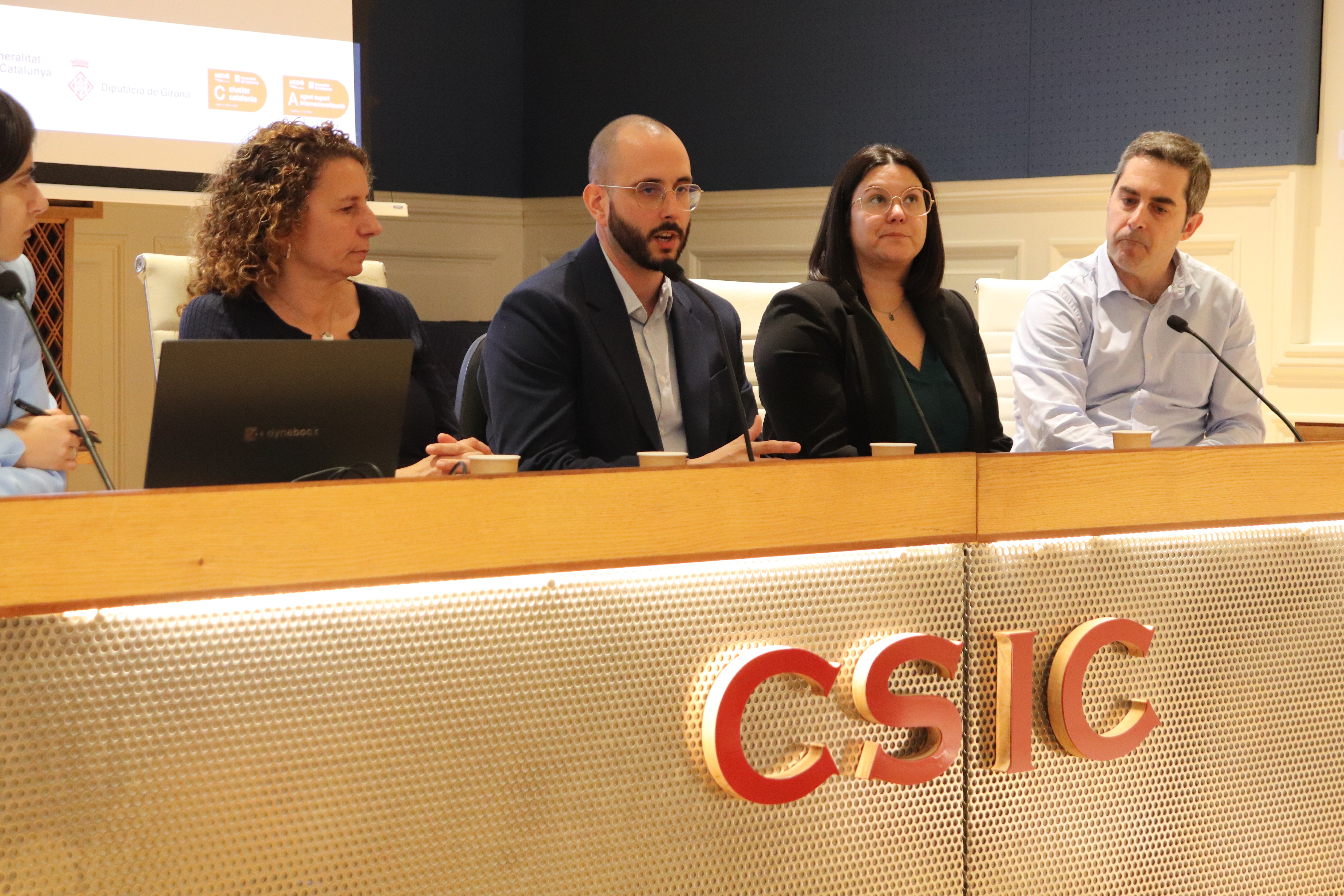
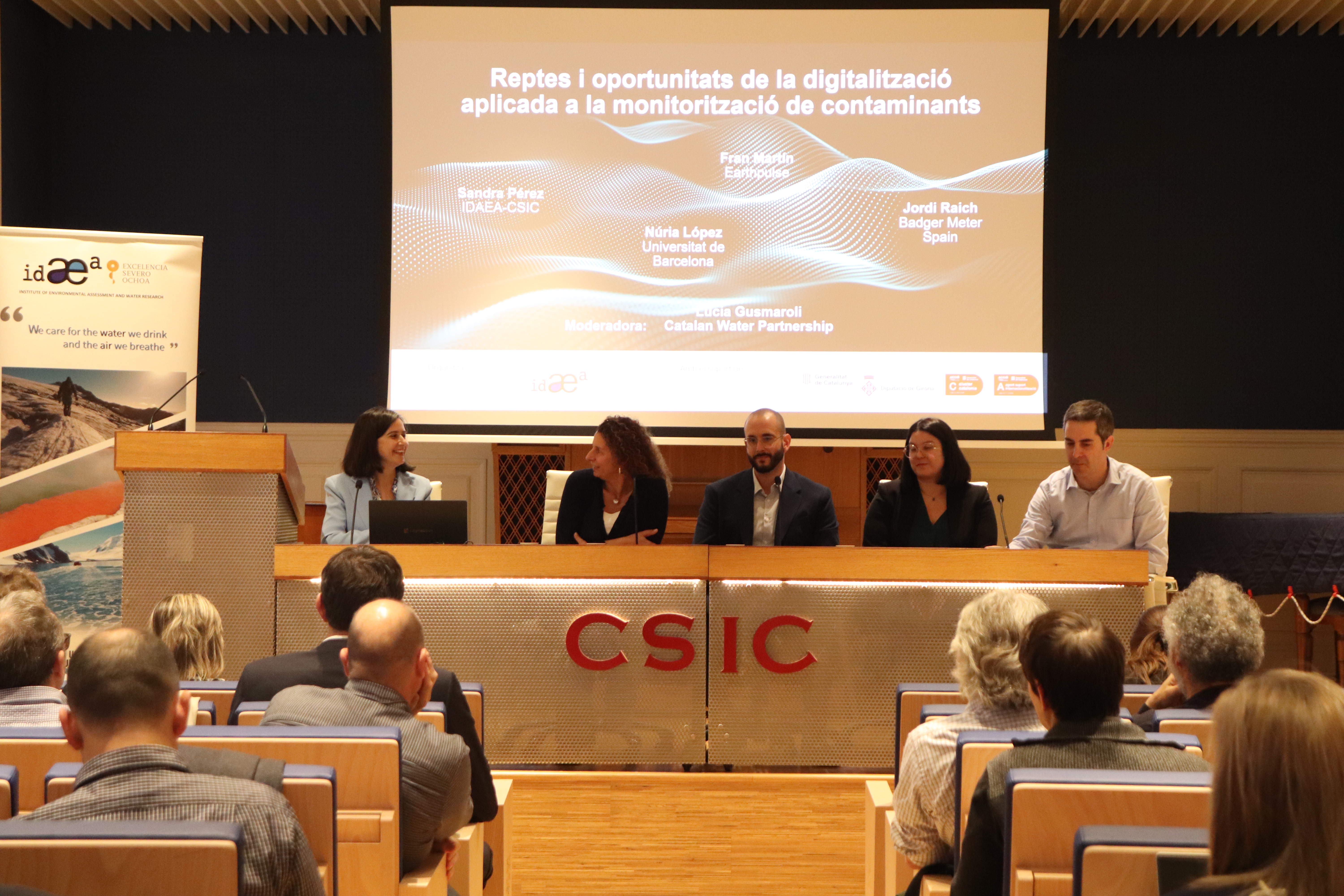
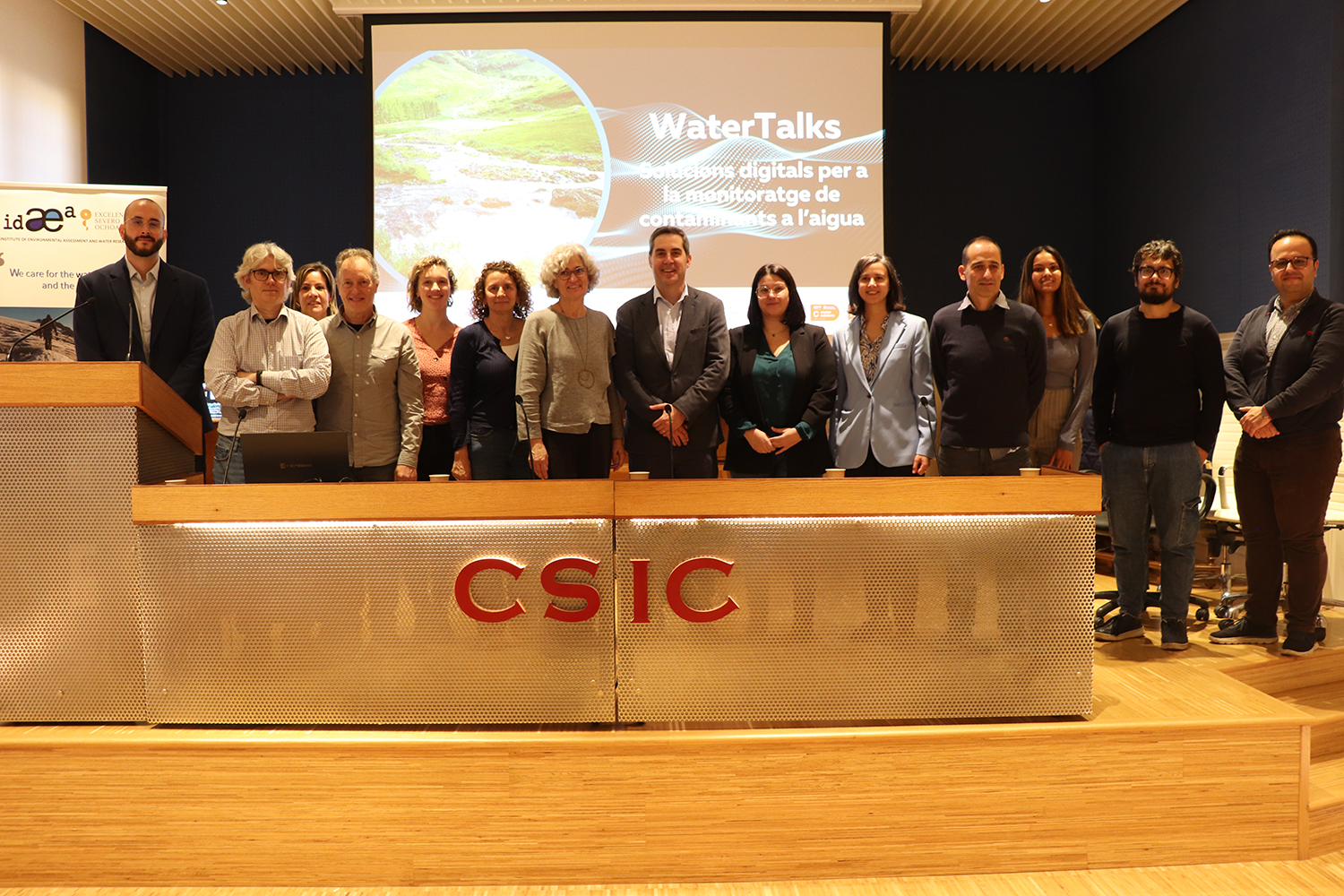
On 18 November, the Catalan Water Partnership (CWP) hosted a new edition of WaterTalks. The session was dedicated to one of the most pressing challenges in the sector: how can digital technologies support public administrations monitoring water contaminants more efficiently.
The session brought together researchers, companies, and practitioners to discuss best practices, what’s working, what’s not, and which innovations are most promising.
Fran Martín, Product Manager at Earthpulse, took part in a panel discussion exploring the challenges and opportunities of digitalisation in water-quality monitoring. After the event, we sat down with Fran to delve deeper into his perspective and the lessons he’s gathered from working across environmental intelligence, satellite data and AI.
Fran, during the session you presented several examples of digital technologies applied to water quality. How would you summarise your experience?
The conversations were incredibly interesting. Each presentation approached the problem from a slightly different angle, from chemistry modelling, engineering, and that diversity of approaches enriched the discussion around how to tackle the challenge. It also showed that solutions emerge from collaborative approaches and when multiple perspectives are taken into consideration.
As of our perspective, at Earthpulse we work with satellite and geospatial intelligence to understand environmental processes that influence water quality, ecosystems, and ultimately the broader spectrum of risks.
For example, we know that most of the contaminants we deal with are diffuse: turbidity, algal blooms, land-use changes that degrade water quality. What really makes the difference is our ability to automate these analyses at regional or national scale and integrate them into operational dashboards. That’s what enables near-real-time decision-making.
Two projects illustrate clearly this approach. We worked on SATWATER 1 which allowed us to build a full Earth Observation powered monitoring system for water quality. Then, SATWATER 2 went further by introducing an AI model that fills in observational gaps, for example during cloud cover. This approach ensures continuity and reliability. These projects reflect exactly how we see our role: we have a full in-house research and development centre. We start with the problem and from that we develop the solution using the best technology.
You mentioned collaboration with knowledge centres during the event. How do these partnerships shape your work?
We collaborate with knowledge centres in several areas, especially where meteorological and climate-driven modelling is essential. In the water-quality domain, however, we’ve often played the dual role ourselves: methodological design, scientific validation and technical development are frequently conceived inside Earthpulse.
That said, the broader principle that we hold is that collaboration accelerates innovation. When expertise from environmental science, data modelling and operations work in syncrony, the results tend to be stronger than if each discipline worked in isolation. Strengthening these synergies is one of the great opportunities for the sector.
When it comes to contaminant monitoring, what are the main bottlenecks blocking large-scale adoption of digital solutions?
The obstacles are not just technological. They’re also cultural, operational and regulatory.
In our experience, we’ve noticed that many digital solutions perform well in pilot settings but struggle to scale. We’ve noticed also a cultural dimension: in many organisations, there is still some hesitation around adopting new types of environmental data. Part of our work involves helping teams understand how to use and trust these tools. And while the event highlighted how difficult it can be to scale hydrological studies across sites, satellite-based approaches offer an advantage here because they are inherently scalable when designed well.
On top of this, hydrometric and analytical data are often incomplete, inconsistently structured, or simply not openly available. Another challenge is around administrative procedures, which very often slow down deployment and the standards for quality and validation vary widely.
To unblock this, we need harmonised standards, better open data repositories, and regulatory frameworks that allow emerging technologies to be validated in real service environments. It’s not only about building technology, it’s about creating the right conditions for it to be trusted and integrated.
You spoke quite passionately about making sure digitalisation creates real value. What does that mean in practice?
As I said earlier, it means starting from the problem, not the technology.
Digitalisation is useful when it automates manual processes, offers indicators that operators can actually use, reduces uncertainty, and avoids generating data that nobody will ever look at. That’s why we invest so much time in co-design with clients: we sit with them, understand their workflows, define the indicators they truly need, and only then build models or dashboards.
The biggest risk in digitalisation is producing noise instead of clarity.
Artificial intelligence is advancing rapidly. What real potential do you see for AI in contaminant prediction and where should we still be cautious?
In this specific scenario, AI has enormous potential to improve prediction and detection of contaminants, especially when combining satellite time series, climate data and in-situ observations. It can reveal subtle patterns, anticipate events and generate alerts before a problem becomes visible.
But fully relying on AI is dangerous when historical data is limited, when the phenomenon is extremely local or chaotic, or when models haven’t been validated across many different conditions.
At Earthpulse, we use AI as an interpretive and predictive tool, always paired with scientific human oversight. AI can accelerate what experts know how to do already, it doesn’t replace expertise.
There’s growing interest in the use of “virtual sensors”. What is your take on their potential?
Virtual sensors can offer real value, especially for estimating variables that are difficult or expensive to measure continuously. But I see them as complementary tools, not replacements for in-situ monitoring.
Their most promising uses are predicting chemical or physical parameters from satellite data, anticipating contamination events, or interpolating values between physical measurement points. At Earthpulse we’ve worked with digital models that behave like virtual sensors by estimating environmental variables from EO and climate data. With proper validation, they’re powerful.
From a business perspective, what does the sector need to speed up adoption of these tools? And what does research need?
The sector needs multiple things at the same time. On one side, businesses need reliability and in particular solutions that are scientifically validated. But not only this, they also need interoperability systems that connect to existing workflows through clear APIs. And they need cost models that make sense in the long run.
On the other hand, research needs more high-quality open data and more space for knowledge transfer. When data and challenges are shared early, innovation becomes faster and more meaningful.
Looking ahead, what advances do you expect in the next five years?
I expect that several trends will transform contaminant monitoring: higher-resolution satellites, affordable commercial constellations, stronger AI models tied to real-time climate data, hybrid systems combining EO, in-situ and virtual sensors, and better European standards for sharing environmental information.
All of this will push us from monitoring to anticipating, and that’s where the real value lies for operators, regulators and the public administrations.
The Catalan Water Partnership
As a strategic cluster for the water sector in Catalonia, the Catalan Water Partnership connects companies, research centres, technology providers and public institutions to collectively accelerate innovation around water management.
CWP and IDAEA-CSIC are promoting a WaterTalks session to showcase the latest advances in monitoring water contaminants through digital technologies. Experts from research and industry will share R&D projects, practical application cases, challenges, and opportunities in this increasingly relevant field, which is gaining more importance within the new regulatory framework.
Watch the entire WaterTalks session here.